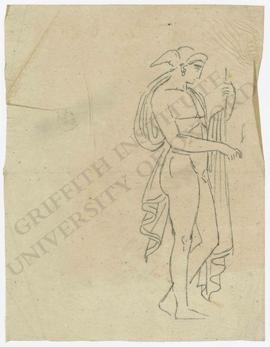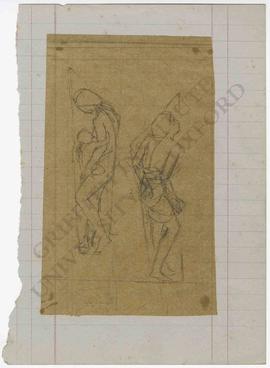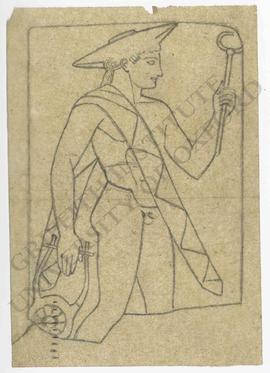
Hermes with caduceus, broad-brimmed hat (petasos) and lyre:
- pencil tracing on tracing paper
- loose, originally mounted together with Bonomi MSS 48.4
- 8.3 x 12.0 cm
Hermes with caduceus, broad-brimmed hat (petasos) and lyre:
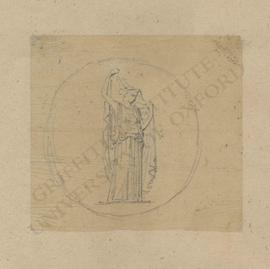
Tondo design of woman with veil:
Portico design with Egyptianizing floral columns, telamones (male caryatids), and classical and Egyptian statues:
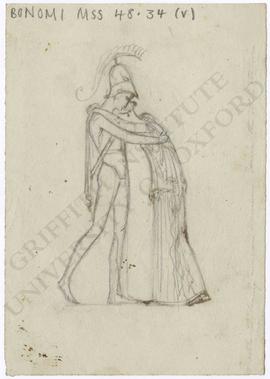
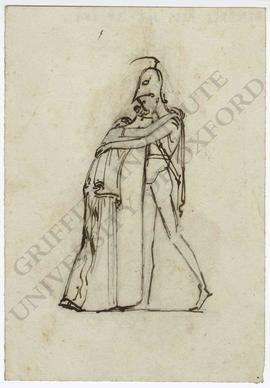
Helmeted man comforting woman:
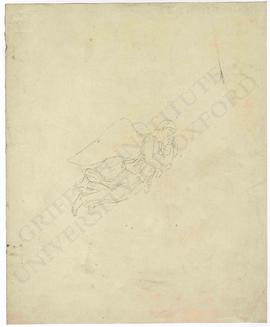
Angel carrying child:
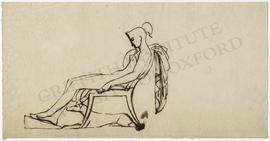
Seated Diana:
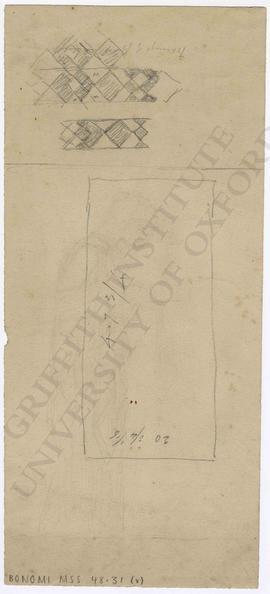
Diagram and frieze patterns:
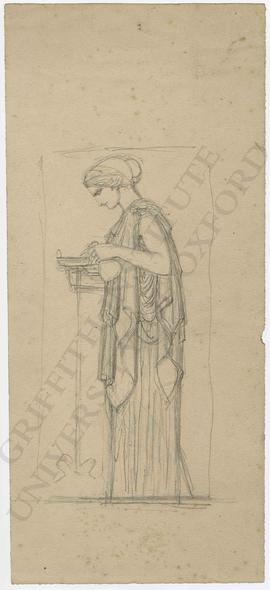
Woman pouring oil into a lamp:
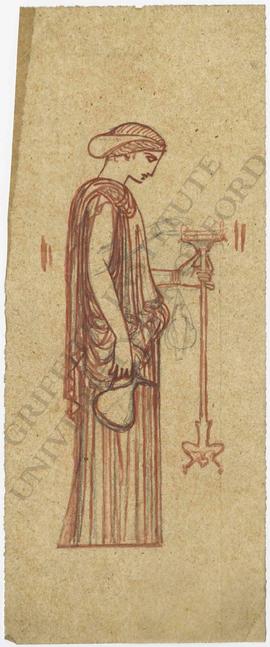
Woman holding ewer and lamp:
Pediment design with Britannia(?) enthroned:
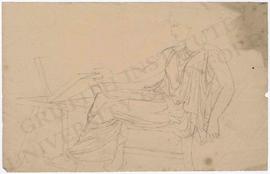
Woman seated at desk:
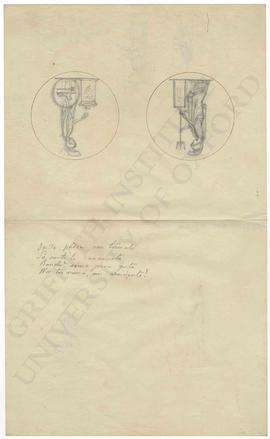
Two designs featuring the goddess Britannia and quatrain in Italian:
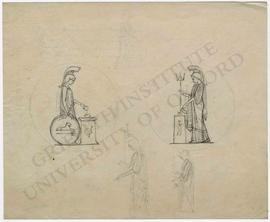
Designs and sketches featuring the goddess Britannia:
New Zealand medal design:
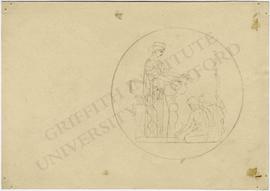
Tondo design of female figure (probably goddess) awarding wreaths to two kneeling men:
Seated female figure with nude child on her lap, chasing a bee:
Standing figure of Hermes in winged hat (petasos):
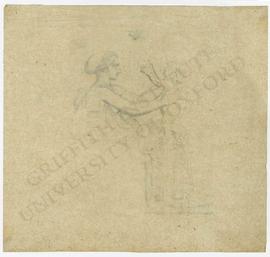
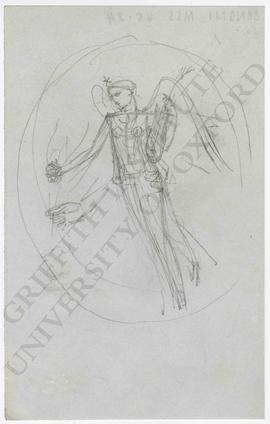
Tondo design of winged female figure (perhaps Nike or Muse) with star on her forehead and holding olive branch and lyre:
Sketches of woman breastfeeding child and male figure:
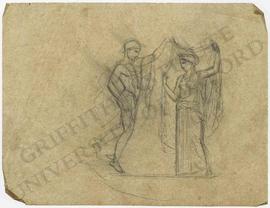
Hermes in broad-brimmed hat (petasos) and winged sandals with caduceus unveiling a woman in classical dress:
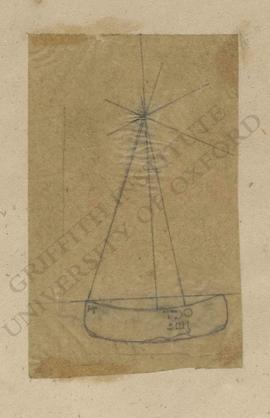
[Upper] Iraq. Nineveh. South-West Palace of Sennacherib. Room V. Slab 43. Relief depicting an Assyrian fortified camp, c. 660-650 BC; sketch from gypsum slab in situ, but reported stolen in 1995 (reversed).
[Lower] Frieze design with women holding amphorae and warriors:
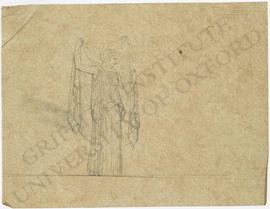
Woman with veil being lifted:
Note:
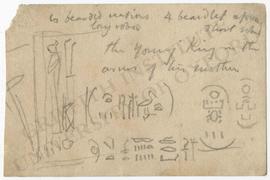
Notes and royal names of Tuthmosis IV (Golden Horus, Throne and Birth names), and Throne name of Sesostris III, from monument of Tuthmosis IV, perhaps from the Temple of Amun-Re and Re-Harakhti at Amada in Nubia (TopBib vii.65-73):
Woman with veil [being lifted]:
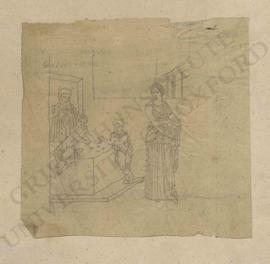
Medea plans the murder of her children, who are playing knucklebones, sketched or traced from a late 19th century engraving reproducing a fresco from the peristyle 53 of the Casa dei Dioscuri at Pompeii, now in Naples, Museo Archeologico Nazionale, inv. 8977, 1st century AD):
Reverse of ancient Greek coin from Rhodes with a rose (reversed):
Rim of fragment of basalt clepsydra of Philip Arrhidaeus, from Tell el-Yahudiya, now in London, British Museum, inv. EA 938, c. 320 BC (TopBib iv.58A):
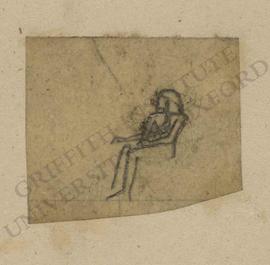
Seated Egyptian figure: