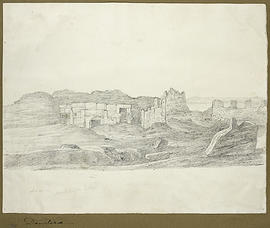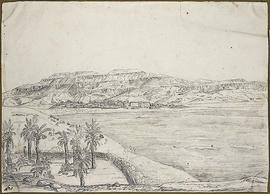
View of the temples at Medinet Habu and the terrain of the west bank of Thebes:
- pencil drawing
- mounted
- [on recto, bottom left corner] 'Nº1'. (ink note)
- 34.0 by 24.7 cm
View of the temples at Medinet Habu and the terrain of the west bank of Thebes:
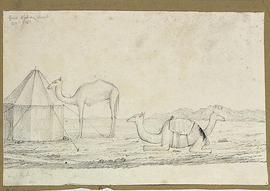
Drawing of several camels in a desert landscape in Nubia:
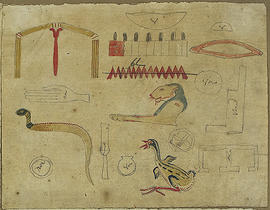
Drawing of several hieroglyph signs including a range of animals such as the upper body of a lion and snake, seven signs also include coloured details:
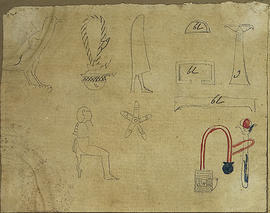
Drawing of several hieroglyph signs, including one combined sign for 'scribe' (ss) which has coloured details:
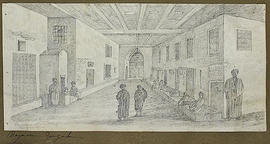
View from Girgeh of the bazaar with several figures seated on either side of the pathway:
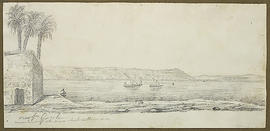
View from Girgeh including a building on the left side with a seated figure looking out to the water, and two small boats on the Nile:
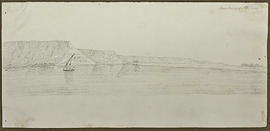
Landscape view from the river of an unidentified location, with visible hills on the bank of the Nile:
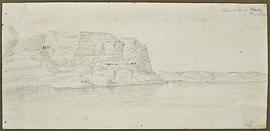
View from the river of the quarries south of El-Khizindariya, at Gebel Sheikh el-Haridi:
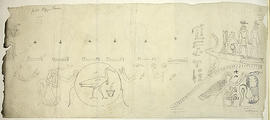
Tracing of mythological scenes from a papyri including deities upon a barque and an encircled ba bird:
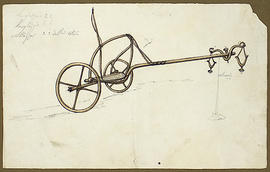
Drawing of a chariot found in an 18th Dynasty Theban tomb:
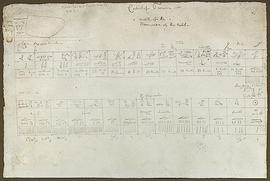
Drawing of a cubit measure, including subdivisions:
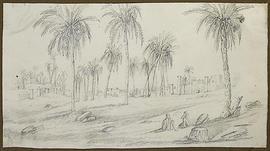
Landscape view, including several palm groves and remains of ancient monuments in the background:
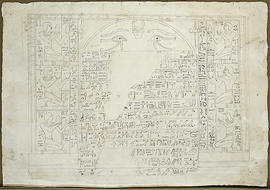
Mythological scenes from the sanctuary area of the Amun temple at Hibis:
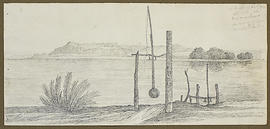
View of the landscape at Dendera, including a shaduf positioned close to the edge of the Nile:
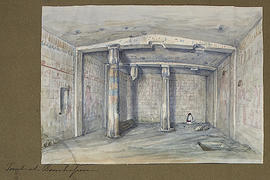
View of the hallway of the early 11th Dynasty tomb of Khety at Beni Hasan (Tomb 17) including faint coloured details of the relief scenes and inscription across the walls and columns, and a seated figure close to the back wall:
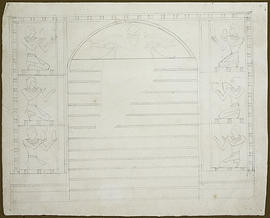
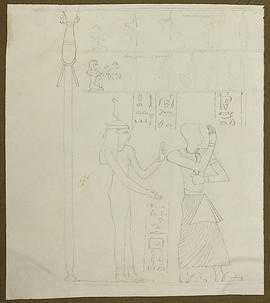
Relief scene from the hallway of the early 18th Dynasty tomb of Benia Pahekmen (TT343) at the west bank of Thebes of a large round-topped stela with three-registers on either side, with the tomb-owner shown kneeling and presenting offerings:
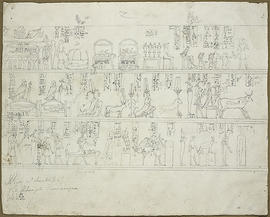
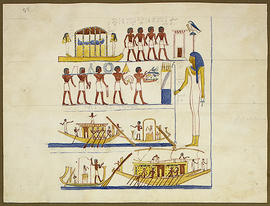
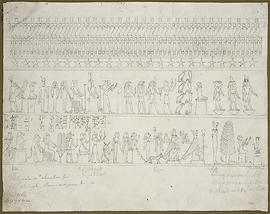
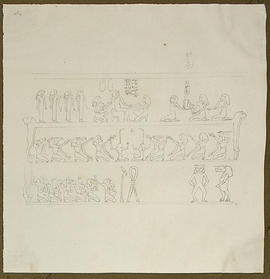
Relief scene from the inner room of the early 18th Dynasty tomb of Benia Pahekmen (TT343) at the west bank of Thebes of four registers of a funerary procession, including rows of offering-bearers and large barques, before a large figure of a Western goddess. The upper register shows the deceased being transported to the tomb.
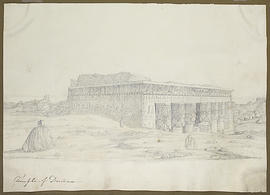
View of the exterior face of Temple of Hathor of Dendera, including several of the Hathor-headed columns:
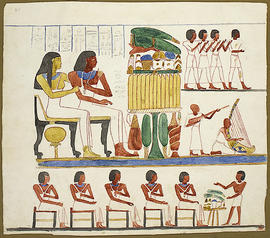
Relief scene from the hallway of the early 18th Dynasty tomb of Benia Pahekmen (TT343) at the west bank of Thebes of two registers, with the upper scene showing the tomb owner and his wife seated before a table piled with offerings. Beside the table are a group of musicians including a figure playing the lyre and the harp. On the lower register is a row of seated guests before a smaller table of offerings:
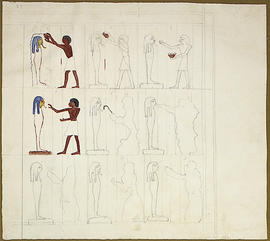
Relief scene from the inner room of the early 18th Dynasty tomb of Benia Pahekmen (TT343) at the west bank of Thebes of three-registers, the lower two registers containing incomplete areas, of rites being performed for the mummy with offerings and libations:
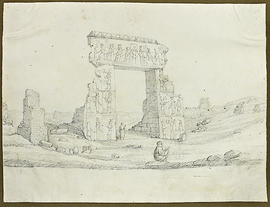
View of the inner face of the propylon at the Temple of Hathor of Dendera:
View of the Hathor temple of Dendera, including the Birth House structure:
Relief scene from the hallway of the early 18th Dynasty tomb of Benia Pahekmen (TT343) at the west bank of Thebes of a large round-topped stela with three-registers on either side, with the tomb-owner shown kneeling and presenting offerings:
Mythological scenes from the sanctuary area of the Amun temple at Hibis:
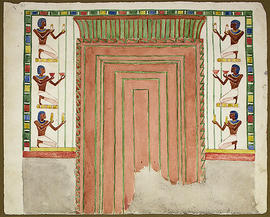
Relief scene from the hallway of the early 18th Dynasty tomb of Benia Pahekmen (TT343) at the west bank of Thebes of a large false-door with three-registers on either side, with the tomb-owner shown kneeling and presenting offerings:
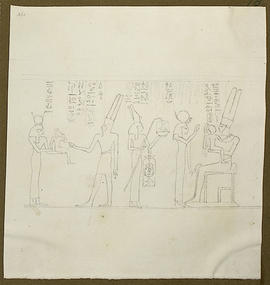
Relief scene from the Birth Room within the temple of Luxor at Thebes, part of a larger sequence relating to the birth cycle of the king and shows the goddess Hathor presenting the child Amenhotep III to the god Amun, the goddess Mut carrying the heb-sed sign, and again the goddess Hathor before the seated god Amun, now holding the child:
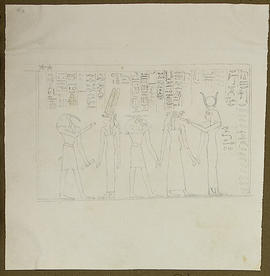
Relief scene from the south sanctuary area of the Hathor temple at Deir el-Medina of the weighing of the heart, also known as the judgement, with a male individual followed by the goddess Maat. Above is part of two registers of seated deities with a kneeling figure at both far left ends of the register:
Relief scene from the Birth Room within the temple of Luxor at Thebes, part of a larger sequence relating to the birth cycle of the king and consists of three rows. At the top, queen Mutemwia gives birth upon a lion-couch before several deities including the souls of Pe and Nekhen, Bes, and Tawaret (third row):
Relief scene from the Birth Room within the temple of Luxor at Thebes, part of a larger sequence relating to the birth cycle of the king and shows the god Thoth before the queen Mutemwia, followed by Mutemwia encircled by the gods Khnum and Hathor who lead the queen to the birthing room:
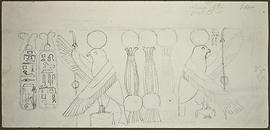
Relief scene from the Outer Hypostyle area of the Temple of Horus at Edfu, part of a larger astronomical frieze and features a set of royal cartouches: