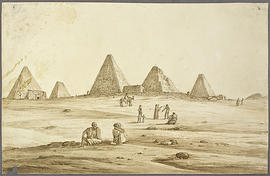
View of the pyramid field area at Gebel Barkal, with several pyramid structures visible in the distance:
- watercolour
- mounted
- [on recto, top left edge] 'Pyramids of Gibel Birkel G A H P 2'. (pencil note)
- 41.5 by 27.4 cm
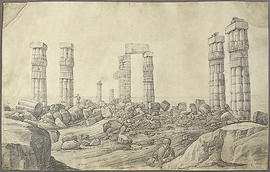
View of the pyramid field area at Gebel Barkal, with several pyramid structures visible in the distance:
View of the courtyard area of the temple of Amun and Amenhotep III at Soleb:
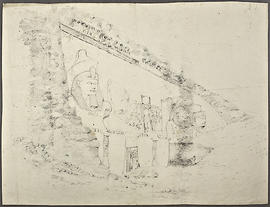
View of the facade of the great temple of Re-Harakhti at Abu Simbel:
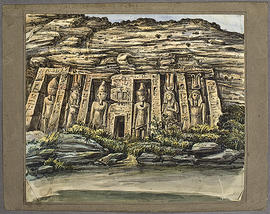
View of the facade of the small temple of Hathor of Abeshek and Queen Nefertari at Abu Simbel:
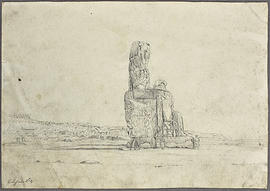
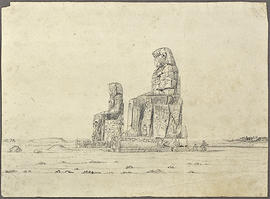
Colossi of Memnon, located at the site of the temple of Amenhotep III at Kom el-Hetan on the west bank at Thebes:
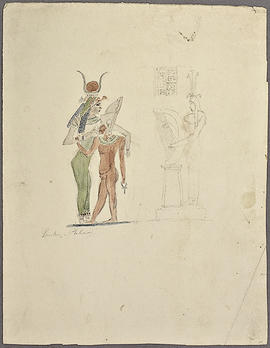
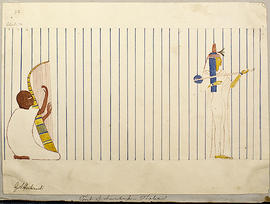
Figures from the forecourt area of the birthhouse and the exterior of the sanctuary at Philae. On the left is an image of the goddess Isis suckling the king from the birthhouse, and on the right is a harpist figure outlined in pencil from the sanctuary:
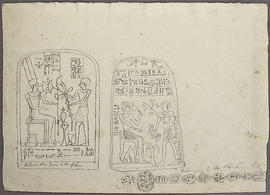
Drawing of two stelae. On the left side is the early 18th Dynasty stela of a man named Anen, likely from Thebes, showing Anen offering flowers to the seated god Amun-Re. On the right side the stela is from the 17th Dynasty of prince Ahmose, of unknown provenance, showing Ahmose seated with his pet dog in receipt of offerings. Along the bottom edge of the paper is another separate sketch of a bracelet consisting of various scarabs with inscribed bases:
A lintel from the small temple at Medinet Habu, including three lines of royal titulary of Thutmosis III:
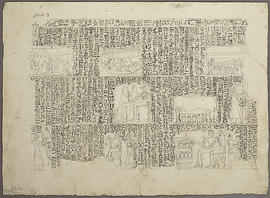
Relief scene from the passageway of the early 18th Dynasty tomb of Neferhotep (TT50) at the west bank of Thebes. This scene shows part of three registers, the majority of these containing text on festival processions and rituals. The text is interspersed with images of the seated tomb-owner and his wife, the divine barque and other funerary ritual scenes:
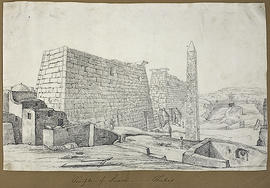
View of the pylon and obelisk at Luxor temple in Thebes:
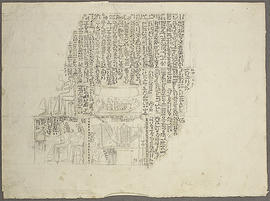
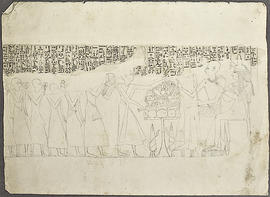
Relief scene from the passageway of the early 18th Dynasty tomb of Neferhotep (TT50) at the west bank of Thebes. This scene shows part of three registers, the top complete with text and the two below including images of the seated tomb-owner and his wife, and images of the divine barque. The text is concerned with festival processions and rituals:
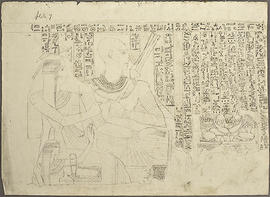
Relief scene from the passageway of the early 18th Dynasty tomb of Neferhotep (TT50) at the west bank of Thebes. This scene shows the seated tomb-owner and his wife on the left, with a smaller figure of their daughter beside them, with a table of offerings placed before them on the right side:
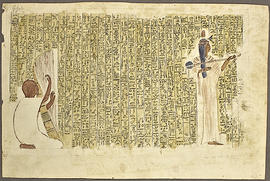
Relief scene from the early 18th Dynasty tomb of Neferhotep (TT50) at the west bank of Thebes. This scene comes from register II, and shows a kneeling harpist and a female lutist, both facing to the right side:
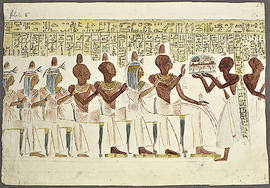
Relief scene from the early 18th Dynasty tomb of Neferhotep (TT50) at the west bank of Thebes. This scene comes from register II, and shows the seated tomb-owner and his wife on the far right while a row of male figures carry flowers, and make offerings including incense and libations before a large offering table:
Relief scene from the early 18th Dynasty tomb of Neferhotep (TT50) at the west bank of Thebes. This scene comes from register I, and shows the son of the tomb-owner making offerings to his seated parents and rows of seated relatives, who are shown embracing each other and wearing funerary cones:
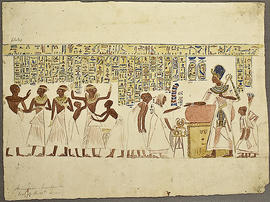
Relief scene from the early 18th Dynasty tomb of Neferhotep (TT50) at the west bank of Thebes. This scene comes from register I, and shows May making offerings before the king Horemheb, with several male figures behind wearing garlands:
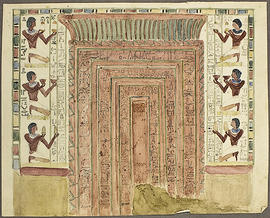
A large false door from the early 18th Dynasty tomb of Benia Pakehmen (TT383) at the west bank of Thebes. This scene shows a large false-door outlined in red, and on either side three registers including a kneeling relief figure of the tomb-owner bearing offerings:
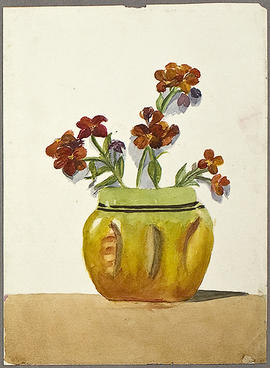
A small group of red-orange flowers (unidentified) in a short yellow vase, likely painted by J. Hoskins:
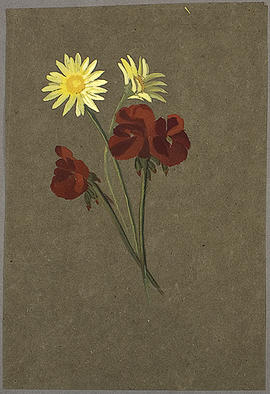
A small group of yellow and red flowers (unidentified), likely painted by J. Hoskins:
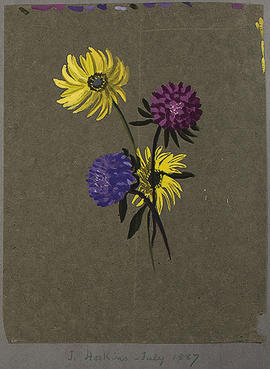
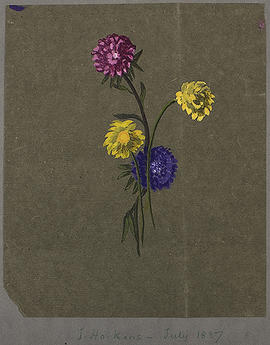
A group of pink, yellow and purple flowers (unidentified)
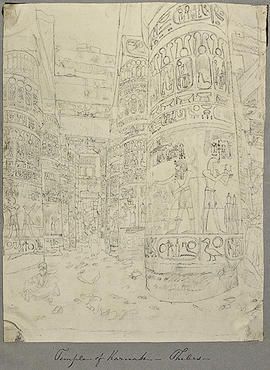
Drawing of the lower portion of small columns within the hypostyle hall of the Amun temple complex at Karnak, including details of the relief scenes and cartouches inscribed on the column:
A group of pink, yellow and purple flowers (unidentified):
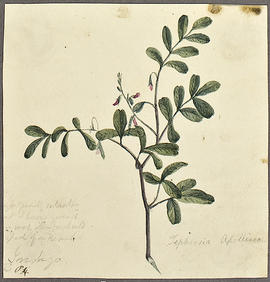
The plant Tephrosia Apollinea:
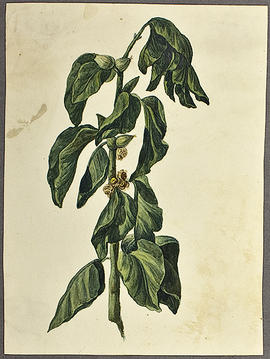
An identified plant:
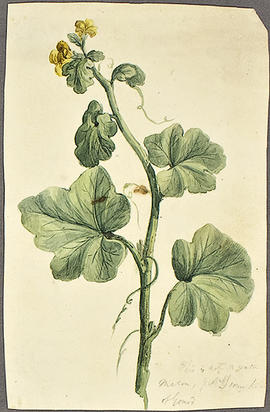
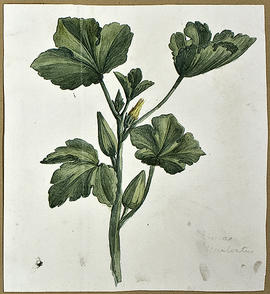
An identified plant, possibly Hibiscus Esculentus:
The plant Hibiscus Esculentus:
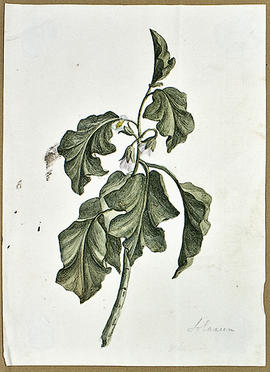
The flowering plant Solanum:
Relief scene from the early 18th Dynasty tomb of Neferhotep (TT50) at the west bank of Thebes. This scene comes from register II, and shows a kneeling harpist and a female lutist, both facing to the right side:
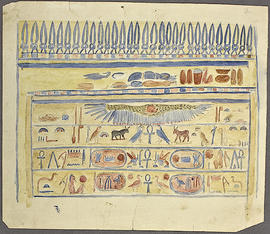
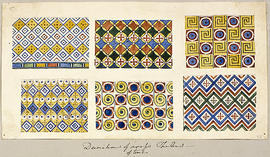
Six detailed ceiling patterns from unidentified tombs on the west bank of Thebes: