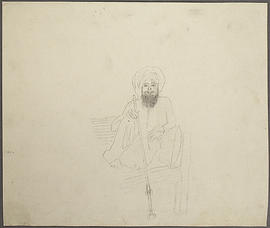
Study of a male figure seated and with a pipe:
- pencil drawing
- mounted
- 27.5 by 22.7 cm
Study of a male figure seated and with a pipe:
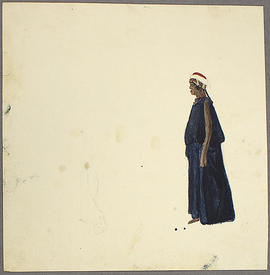
Study of a female figure, wearing a dark dress and facing towards the left. Before her is a faint pencil sketch that is incomplete:
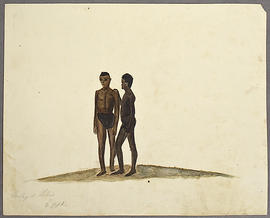
Study of two young boys, one with his hand on the shoulder of the other boy and facing towards him:
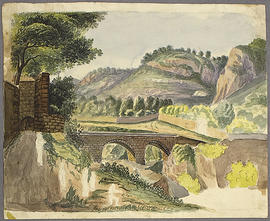
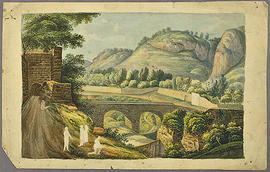
View of an unidentified landscape, possibly Italian. At the lower left side several figures have been outlined in pencil but left incomplete:
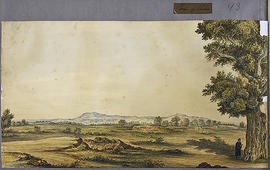
View of the landscape of west bank of Thebes:
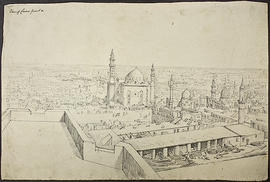
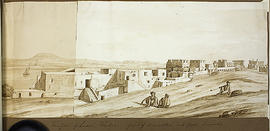
View of Cairo, including the madrasa of Sultan Hasan and the mosque of Amir Akhor:
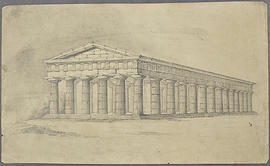
View of the temple of Poseidon (Poseidonia) at Paestum:
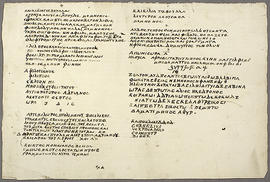
Rendering of the Greek and Latin graffiti from the colossi of Memnon, located at the site of the temple of Amenhotep III at Kom el-Hetan on the west bank at Thebes:
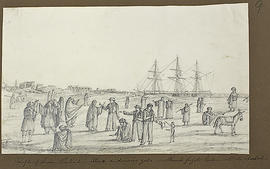
View of a group of dancing girls in the foreground, with Luxor temple and a large warship carrying an obelisk visible in the distance:
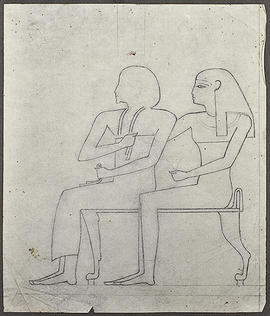
Drawing of a seated man and his wife behind him from an unidentified tomb in Thebes. A faint border for hieroglyphs is visible along the top edge, and a small star shape is visible on the top left corner:
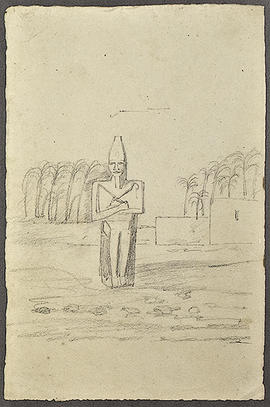
Seated royal statue wearing the White Crown, an unidentified building and landscape behind:
View at Gebel Sheikh el-Haridi:
View at Gebel el-Teir:
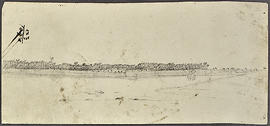
River view:
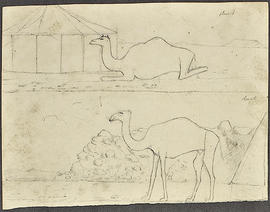
Two camels, the upper scene shows the camel reclining near a tent and the lower scene shows the camel standing:
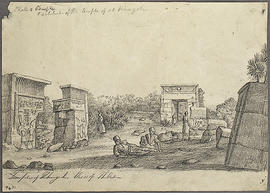
View of the temple of Amun at Hibis, near the el-Kharga oasis:
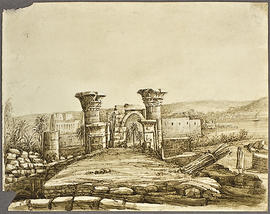
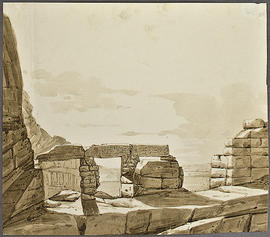
View of the Gate of Diocletian at Philae:
View of the Osiride pillars from the forecourt area of the temple of Ptah at Gerf Husein:
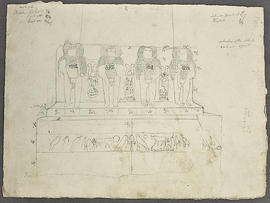
Drawing of a row of baboons found detailed across the base of the east obelisk at Luxor temple. In between the baboons are details of the king's cartouche, and along the edge of the base is a row of hieroglyphs containing the royal titulary:
View of Luxor temple in Thebes, with part of the temple space taken over by modern structures:
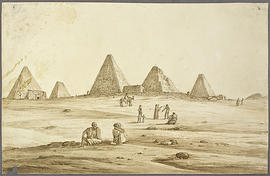
View of the pyramid field area at Gebel Barkal, with several pyramid structures visible in the distance:
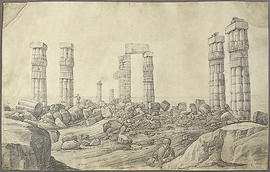
View of the courtyard area of the temple of Amun and Amenhotep III at Soleb:
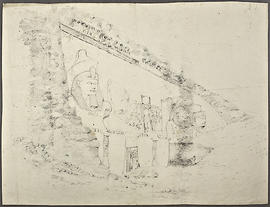
View of the facade of the great temple of Re-Harakhti at Abu Simbel:
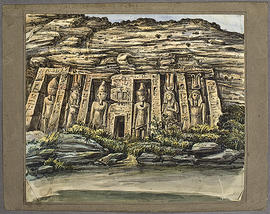
View of the facade of the small temple of Hathor of Abeshek and Queen Nefertari at Abu Simbel:
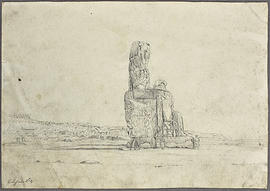
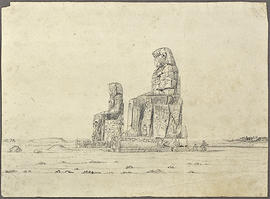
Colossi of Memnon, located at the site of the temple of Amenhotep III at Kom el-Hetan on the west bank at Thebes:
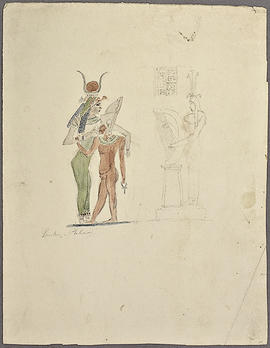
Figures from the forecourt area of the birthhouse and the exterior of the sanctuary at Philae. On the left is an image of the goddess Isis suckling the king from the birthhouse, and on the right is a harpist figure outlined in pencil from the sanctuary:
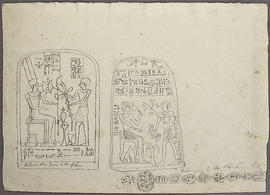
Drawing of two stelae. On the left side is the early 18th Dynasty stela of a man named Anen, likely from Thebes, showing Anen offering flowers to the seated god Amun-Re. On the right side the stela is from the 17th Dynasty of prince Ahmose, of unknown provenance, showing Ahmose seated with his pet dog in receipt of offerings. Along the bottom edge of the paper is another separate sketch of a bracelet consisting of various scarabs with inscribed bases:
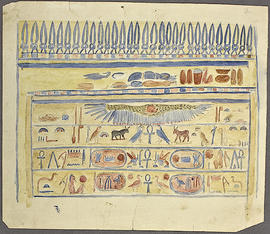
A lintel from the small temple at Medinet Habu, including three lines of royal titulary of Thutmosis III: